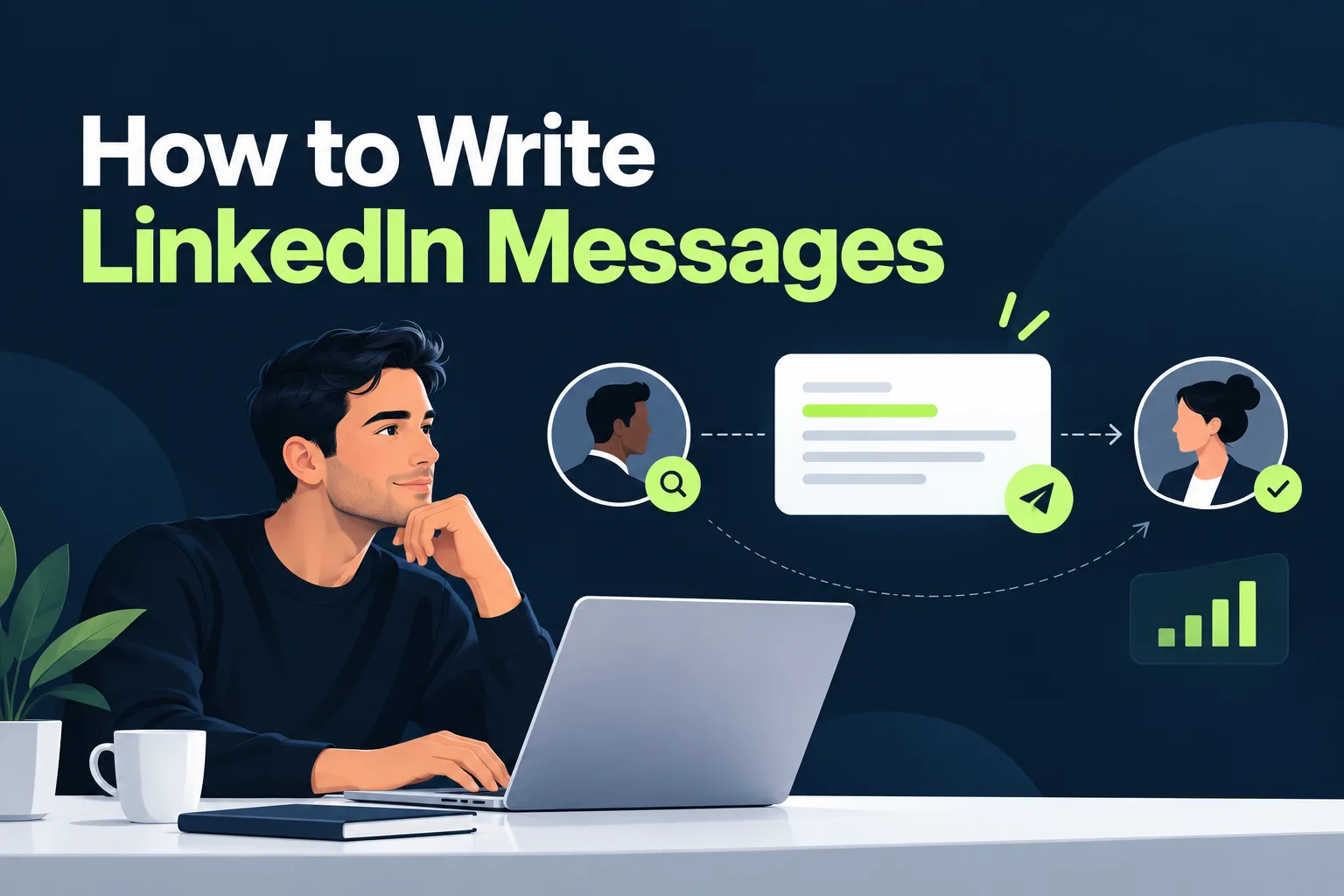
How to Write LinkedIn Messages That Get Replies
Write concise and relevant LinkedIn messages starts with relevance, not volume. LinkedIn works best when a team knows exactly who it is trying to help, why that audience should care, and what a useful first conversation looks like.
Start with a specific audience
Define the ideal customer or candidate by role, industry, geography, company context and current priorities. A broad search creates a broad message. Segmenting the audience lets a team write an opening that reflects a real business situation rather than a generic pitch.
Build a focused prospect list
Use LinkedIn search to identify people who match the segment, then keep separate lists for distinct messages and offers. Review profiles before outreach. The goal is a list that a salesperson, founder or recruiter can explain—not a large spreadsheet with no next step.
Use a connection-first workflow
A connection request should be short and credible. After acceptance, send a message with context: an observation, shared market, role-specific challenge or useful resource. Avoid an immediate hard sell. Follow-up messages should add value, be brief and stop when the recipient is not interested.
Combine outreach with visibility
Publishing useful LinkedIn content makes a profile easier to trust when a prospect checks it. Share practical lessons, informed points of view and examples that your ideal audience can use. innLead AI Poster can help create a 30-day strategy and 30 editable posts, then schedule approved posts for publishing; review every claim before it goes live.
Organize execution and handoff
innLead can source prospects from LinkedIn search URLs, organize lists and support profile visits, connection requests, post-acceptance messages and follow-ups in campaign sequences. Use conversations and analytics to spot interest, then hand meaningful replies to a person. Automation should support a thoughtful process, not replace judgment.
Measure useful signals
Track list quality, relevant connections, conversations and qualified opportunities rather than treating raw activity as success. Do not promise outcomes from a connection count. Improve one variable at a time: targeting, profile credibility, message relevance, follow-up timing or content quality.
Common mistakes to avoid
- Sending the same pitch to unrelated roles.
- Using aggressive volume or repetitive follow-ups.
- Ignoring a decline or lack of fit.
- Making unsupported claims about results or platform safety.
- Forgetting that LinkedIn may apply account-specific restrictions.
Frequently asked questions
Can this workflow guarantee leads or meetings?
No. It improves process consistency; outcomes depend on audience fit, credibility, offer and conversation quality.
Is LinkedIn automation risk-free?
No. Follow LinkedIn’s rules, use relevance and moderation, and review account behavior carefully.
Final thoughts
The durable approach is simple: target carefully, communicate like a person and make the next step easy. Build the right network. Start conversations. Stay visible.